Why Do We Still Tilt at Windmills?
Contents
Who Is Mad, After All?
A book about the adventures of a madman has survived four centuries without fading into history. Alongside Shakespeare’s Hamlet, it is regarded as one of the great works of Western literature and is often called the first modern novel. Its more than 700,000 Chinese characters nearly stopped me at the title page.
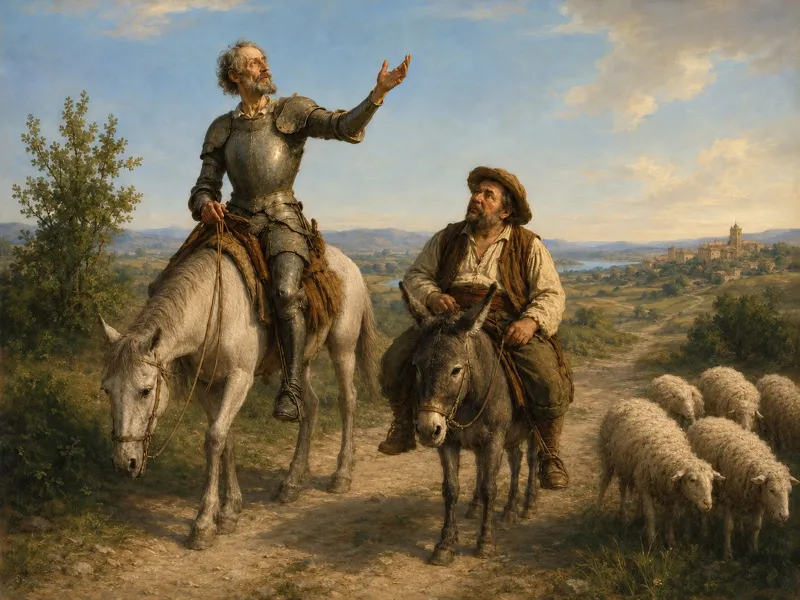
The story begins in absurdity, deliberately imitating the clichés of cheap chivalric romances. Its plot moves slowly and often repeats itself. A thin man in his fifties takes up a lance, mounts a scrawny horse and carries a small round shield. Before giants, monsters and every form of evil, he prays devoutly to his beloved and charges again and again, only to be knocked down each time. His squire follows him through hunger and exposure, enduring every hardship while remaining cheerful, accepting reality yet never surrendering hope.
Don Quixote says, “The purpose of taking up arms is peace, the greatest happiness humankind can hope for in this world.” At that moment, I realized how badly I had misunderstood him. His nobility and courage, persistence and conviction, learning and virtue made me ashamed. The person who deserved ridicule was me, as though he were laughing and saying, “Do not sleep late. If you do not rise with the sun, you have wasted the day.”
As the story continued, Don Quixote made me feel smaller still.
He shows virtue by stepping forward to defend a woman who has been slandered. He displays learning when he speaks with authority about war, knowledge when he navigates by the North Star, and courage when he stands unwavering before a lion. Above all, he has an ideal: “I left my home, mortgaged my property, abandoned a comfortable life and entrusted myself to whatever fate might bring. I mean to restore the chivalry that has fallen into decay.”
Beside him, I lack such resolve. Even in pursuing my ideals, I have become hesitant and timid.
Don Quixote’s madness is visible and universally recognized. He mistakes windmills for giants; even children know he is mad. The madness of society today is more concealed and more ordinary, and so is rarely treated as madness at all. Don Quixote is mad because he mistakes his ideal for reality. Society today is mad because it mistakes reality for the ideal.
To laugh at Don Quixote is to diminish oneself.
The Death of an Idealist
To destroy an idealist, there is no need to destroy his body. Destroying his ideal is enough.
Don Quixote fails more often than not. Each defeat is as humiliating as his charge at the windmills, when his lance breaks and he tumbles to the ground. Yet he always gathers himself, arms himself once more, prays faithfully to Dulcinea for protection in the hour of danger, and charges again at devils and villains—until he meets the Knight of the White Moon.
The Knight of the White Moon challenges Don Quixote with Dulcinea’s beauty and honor at stake, on the condition that Don Quixote must return home for a year if he loses. Don Quixote accepts. The Knight of the White Moon charges into him, knocking both rider and horse to the ground and winning the duel. Behind the disguise is the bachelor Sansón Carrasco, Don Quixote’s friend, who hopes the defeat will send him home to recover. But the duel does more than knock down Don Quixote and his gaunt horse. It shatters his ideal of chivalry. Dulcinea embodies his knightly faith; she is the woman for whom he would surrender everything. After the defeat, he can no longer fight in her name.
For Don Quixote, Dulcinea embodies his chivalric ideal. When the Knight of the White Moon shatters his honor, that ideal collapses with it. His soul dies in that moment. Only the body remains, and its end is close behind. When life loses meaning and nothing but conformity remains; when it loses its ideals and the will to take risks; when curiosity disappears and exploration ends, the body becomes little more than something that breathes. The Don Quixote who believed in chivalry did not fear failure or ridicule. He could always climb back onto his horse and face the next challenge. But when the Knight of the White Moon broke his faith, he lost not only his ideal but his life.
Before dying, Don Quixote says, “I was once Don Quixote de la Mancha. Now, as I have said, I am Alonso Quixano the Good.” This is not a simple change of name but a change of identity. Alonso Quixano’s body became Don Quixote only when filled with a soul that believed completely in chivalry. The duel with the Knight of the White Moon destroyed that ideal and led him step by step toward the grave.
Sancho the Squire, and the Birth of an Idealist
Unlike the “knight of the sorrowful face,” Sancho is cheerful and open-hearted. He is one of the book’s most vivid and endearing characters, and the one who grows the most. Don Quixote merely promises to make him governor of an island, and Sancho, who has never traveled far from home, willingly joins his master in a life of adventure.
He sleeps in the open and endures every hardship beside Don Quixote. He sees the romance of the idealist and his humiliation, but above all he is astonished that an ideal can give this frail man the courage to face a lion. Under Don Quixote’s influence, Sancho gradually begins to understand him. He defends him, becomes less strictly practical, and grows a little mad himself. As Don Quixote lies dying, Sancho weeps and begs him to recover so that they can become shepherds in the fields, as they had planned on the journey home.
We would roam the open country, singing songs and reciting verse. Clear springs and broad rivers would give us water; sweet acorns would be ours to eat in plenty; sturdy cork trees would offer seats and willows their shade. Roses would lend us their fragrance, and wide meadows would spread beneath us like bright carpets. We would breathe fresh air and take our light from the stars and moon. We would sing and make merry, and even sorrow would bring a kind of pleasure. Apollo would give us poetry and love would give us its subject. The verses we made would be known throughout the world and remembered for ages.
Sancho understands the hardship of a shepherd’s life, but he has also seen its freedom. Once, he was a poor farmer who lived a predictable life and had never ventured far from home. Don Quixote showed him the color and richness of the world. The adventures they shared, the people they met, and Don Quixote’s own learning and courtesy revealed ways of living Sancho had never imagined. The man who once wanted only to become a governor will never become a knight, but Don Quixote has taught him that there is more than one way to live.
An Age That Has No Need of Knights
People call Don Quixote mad not only because he mistakes inns for castles and windmills for giants, but because of the chivalry he insists on practicing. Many people he meets are astonished by his appearance. Clad from head to foot in heavy armor, carrying a lance and shield, he is judged mad before he has said a word.
His clothes alone are enough because the age has discarded not merely knights, but everything associated with them. Armor, great swords, lances and round shields are easy to recognize. What has truly disappeared is the code behind them. The courtesies, honors, vows and rituals once treated as articles of faith are no longer taken seriously in Don Quixote’s time. The magic believed in during the age of chivalry has become a trick, even a joke. To the duke and duchess, chivalry is no longer a faith but a spectacle staged for amusement. They use Don Quixote’s convictions for entertainment, turning a once-sacred knightly spirit into an absurd performance.
No matter how brilliant or irreplaceable something once seemed, once an age no longer needs the values it represents, it loses the ground on which it stood. So it was with the knight. The spread of firearms, the rise of standing armies and the growth of centralized states meant that individual courage no longer decided the outcome of war. The knight lost his purpose.
Had Don Quixote been born in an age when chivalry flourished, his devotion to its ideals would have made others see him as a hero. Don Quixote remains Don Quixote. It is the age that no longer belongs to him.
Become Someone Who Tilts at Windmills
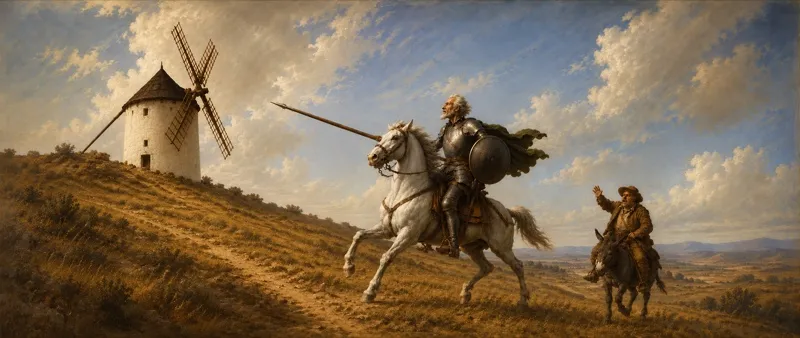
Don Quixote remains a monumental work about ideals and reality. The book contains errors, passages that drag, and episodes that now seem utterly absurd. None of these flaws can obscure the light it has cast for four hundred years. The windmills of Don Quixote’s homeland still stand, waiting for a knight to challenge them, and Cervantes’s story continues to light the road for those who tilt at windmills.
Raise your shield. Grip your lance. Spur the gaunt horse beneath you. Then, after a prayer, charge calmly toward the windmill in your heart.
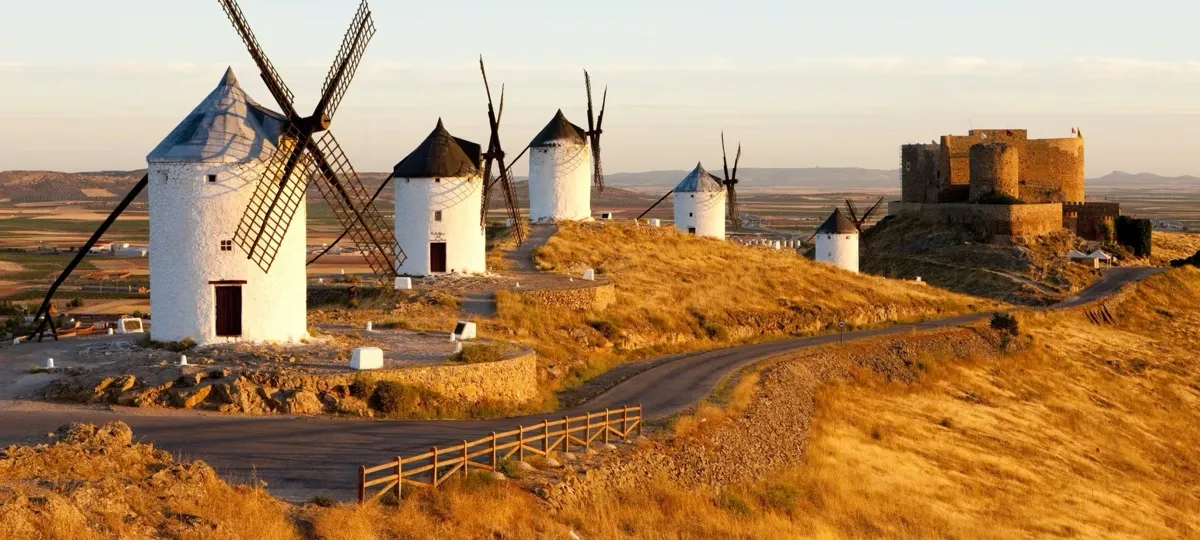
La Mancha, the homeland of Don Quixote, is a beautiful place.
1 July 2026
Sydney
✺ END ✺