Winter in Yangzhou (Part II)
Contents
Among the cities of the Yangtze River Delta, Yangzhou seems somewhat understated. In many people’s minds, it is still the tourist city of “going down to Yangzhou in the misty flowers of March.” Yet beyond its famous sights and landmarks, what keeps drawing me back is still the old city.
Slender West Lake
When people hear the name West Lake, they naturally think of Hangzhou’s West Lake, the one described in the line, “If West Lake were compared to the beauty Xizi, light or heavy makeup would both suit her.” But Yangzhou also has a Slender West Lake, and its character is completely different from that of Hangzhou’s West Lake.
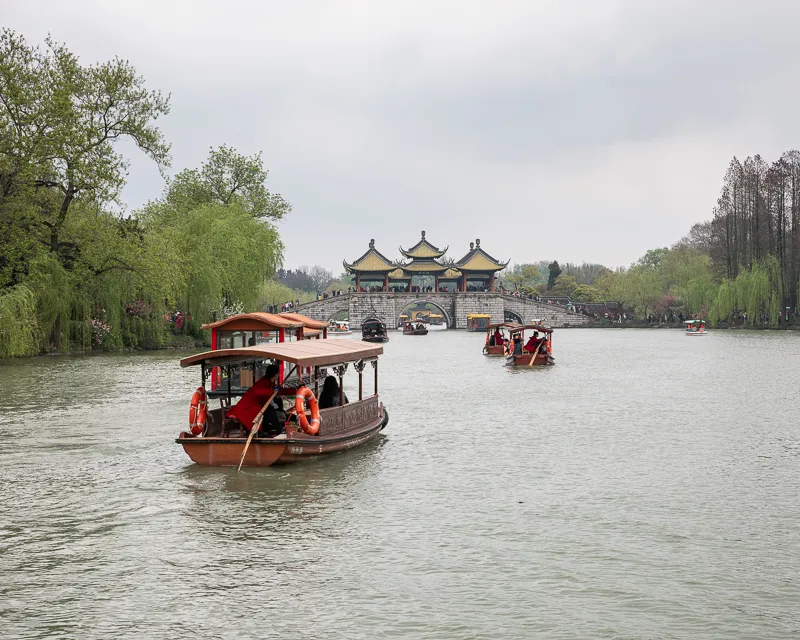
Five-Pavilion Bridge at Slender West Lake, a landmark of Yangzhou
Canon EOS 5D Mark IV
EF 24-70 f/2.8L II USM
F8.0 | 1/200 s | 61mm | ISO 100
The name Slender West Lake naturally invites comparison with West Lake in Hangzhou. In fact, during the Qianlong era, the Hangzhou poet Wang Hang visited Yangzhou and compared it with his hometown in a poem:
Willows stretch on beside the fading reeds,
The arched bridge stands like part of a painting.
This too is a place where fortunes are spent,
So it should indeed be called Slender West Lake.
The name “Slender West Lake” first appeared in the Qing dynasty text Preface to the Yangzhou Guchui Ci: “A stretch of water north of the city reaches Pingshan Hall. It is called Slender West Lake, formerly Baozhang Lake.” Although the name itself can only be traced back to the Qing dynasty, gardens had already been built around the lake since the Sui and Tang periods. By the Qing dynasty, influenced by the six southern tours of the Kangxi and Qianlong emperors, Slender West Lake reached the height of its development. Like Daming Temple, it also attracted many poets and writers. Li Bai, Du Mu, Su Shi and others left behind poems describing the prosperity of Yangzhou in those days.
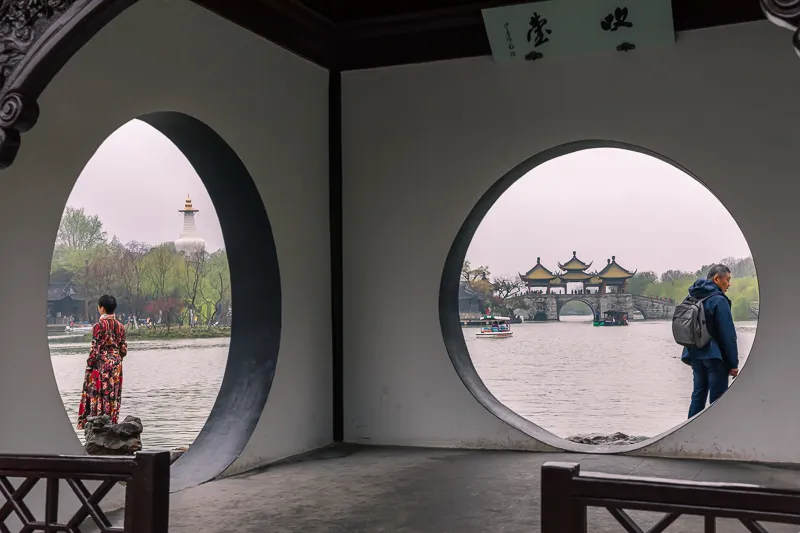
Fishing Terrace, a classic example of framed scenery in Chinese gardens
Canon EOS 5D Mark IV
EF 24-70 f/2.8L II USM
F6.3 | 1/125 s | 42mm | ISO 250
The official introduction to Slender West Lake reads: “Slender West Lake Scenic Area is located in the historic and cultural city of Yangzhou. Its visitor area covers 2.5 square kilometers. It forms an important part of the Grand Canal World Cultural Heritage site and is the core area of the Shugang–Slender West Lake National Scenic Area. The group of lakeside gardens formed during the Kangxi and Qianlong periods of the Qing dynasty combines the delicacy of the south with the grandeur of the north. The long, winding lake links together sites including Xu Garden, Little Golden Hill, Five-Pavilion Bridge, White Pagoda, Twenty-Four Bridge, Wanhua Garden and Shuangfeng Yunzhan, giving the area its distinctive character and earning it widespread recognition both in China and abroad.”
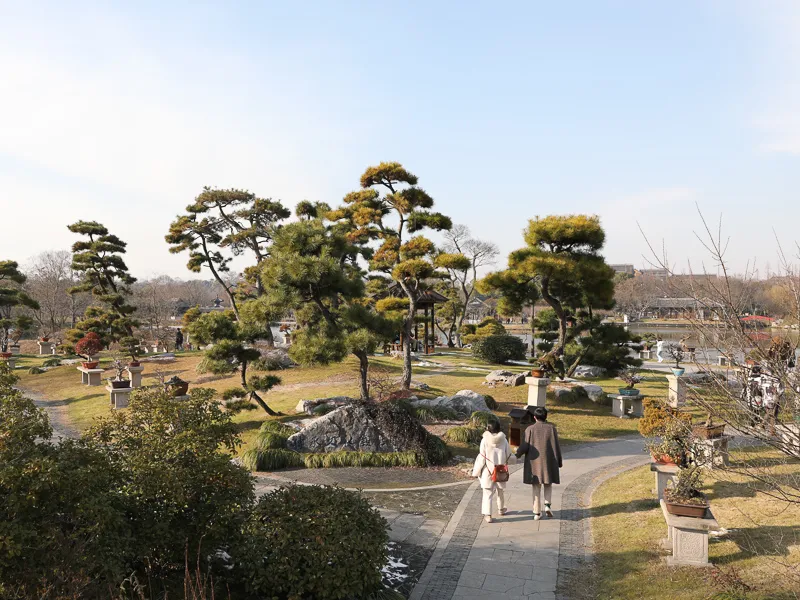
The garden behind the Bonsai Museum
Canon EOS 5D Mark IV
EF 24-70 f/2.8L II USM
F8.0 | 1/125 s | 27mm | ISO 100
There are many sights around Slender West Lake, so I will only mention a few that left a stronger impression on me. The first is Fishing Terrace, formally called Chuitai, which faces Five-Pavilion Bridge. It is a pavilion enclosed on three sides by yellow walls. Fishing Terrace stands at the end of a causeway extending into the lake, with willow trees lining both sides. According to legend, Emperor Qianlong once fished here, which is how it became known as Fishing Terrace. What makes Fishing Terrace especially notable is its use of “framed scenery”, and it has become a classic example of this technique in Chinese garden design. Each of the three walls has a circular opening. Looking west from outside the pavilion, two of the openings neatly frame the White Pagoda and Five-Pavilion Bridge in the distance. In a place with so many visitors, getting a photograph of the view without anyone in it takes some patience. I managed to take one shortly after eight in the morning, before most visitors had arrived.
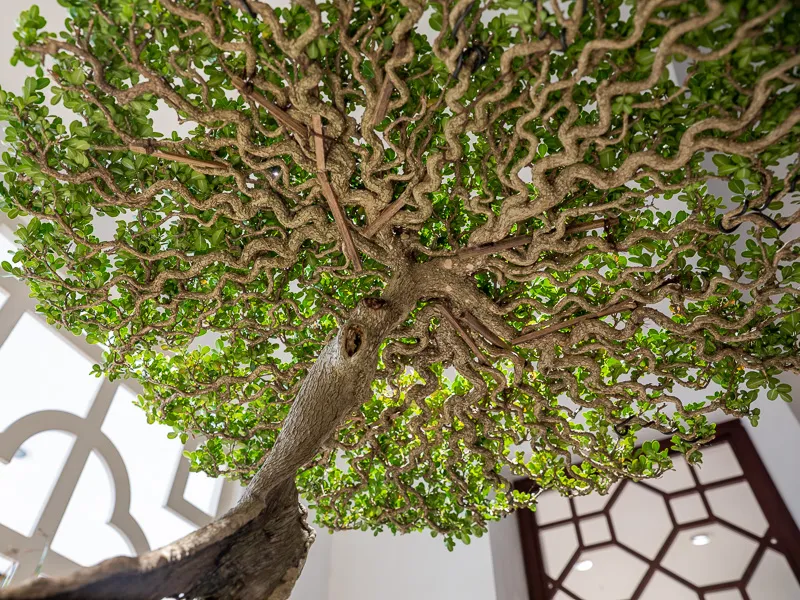
Yangzhou-style bonsai
Canon EOS 5D Mark IV
EF 24-70 f/2.8L II USM
F4.5 | 1/13 s | 24mm | ISO 250
Facing Fishing Terrace is Five-Pavilion Bridge, the landmark of Slender West Lake and, in many ways, of Yangzhou itself. Just as images of the Three Pools Mirroring the Moon can be found all over Hangzhou, Five-Pavilion Bridge appears throughout Yangzhou, on manhole covers, railings and buses. As its name suggests, Five-Pavilion Bridge is a bridge topped by five pavilions and was first built in the Qing dynasty. Its main structure is made of stone, and from above it has the shape of the Chinese character “工”. Five connected pavilions stand at the four corners and the center. The well-known Chinese bridge engineer Mao Yisheng once said: “The oldest bridge in China is Zhaozhou Bridge, the most magnificent is Lugou Bridge, and the most graceful and artistically representative is Yangzhou’s Five-Pavilion Bridge.”
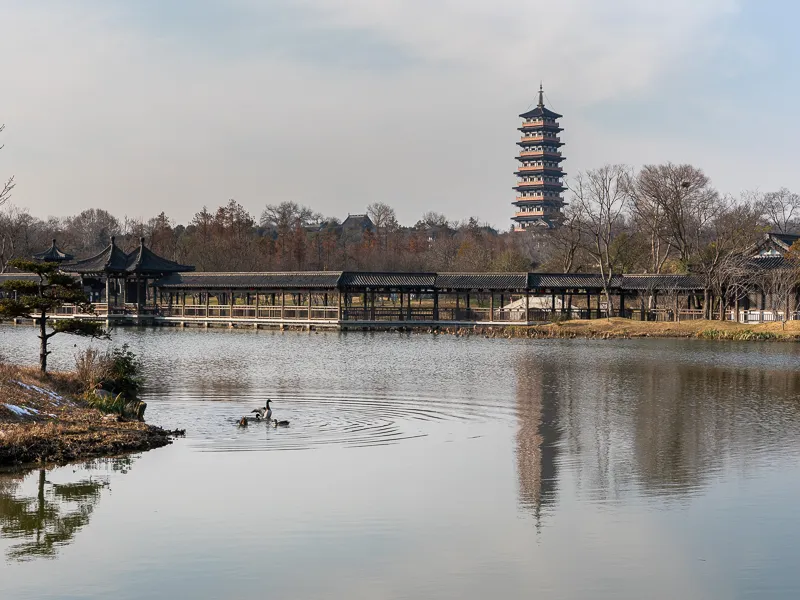
Qiling Pagoda of Daming Temple seen from Slender West Lake
Canon EOS 5D Mark IV
EF 24-70 f/2.8L II USM
F8.0 | 1/160 s | 59mm | ISO 100
Continuing west after crossing Five-Pavilion Bridge, you come to another bridge that is smaller but more delicate: Twenty-Four Bridge. The whole structure consists of a walkway, an arched bridge, a three-section flat bridge and a pavilion. The bridge is 24 meters long and 2.4 meters wide, with 24 railings and 24 steps on both sides, all connected in some way with the number twenty-four. The Tang poet Du Mu once wrote:
Green hills fade into the distance, waters stretch far away,
Autumn ends in Jiangnan and the plants begin to wither.
On a moonlit night at Twenty-Four Bridge,
Where is the beauty teaching someone to play the flute?
Northeast of Twenty-Four Bridge is the Yangzhou-style Bonsai Museum. Chinese bonsai is commonly divided into five major schools: Lingnan, Suzhou, Sichuan, Shanghai and Yangzhou. Yangzhou-style bonsai dates back to the Tang dynasty and takes its name from Yangzhou in Jiangsu. It is known for a pruning technique called “three bends in one inch”. The museum displays many award-winning works. Their careful craftsmanship and distinctive forms, combined with the natural characteristics of the trees themselves, make them works of art. I had always assumed that bonsai trees were young plants that had not yet fully grown. In fact, even the younger specimens here are around fifty years old, while some are more than a century old. There are even more bonsai in the rear garden, including one about 500 years old. The pines and cypresses planted in the garden, although not kept in pots, are still pruned using similar techniques, their branches bending and twisting into unusual forms.
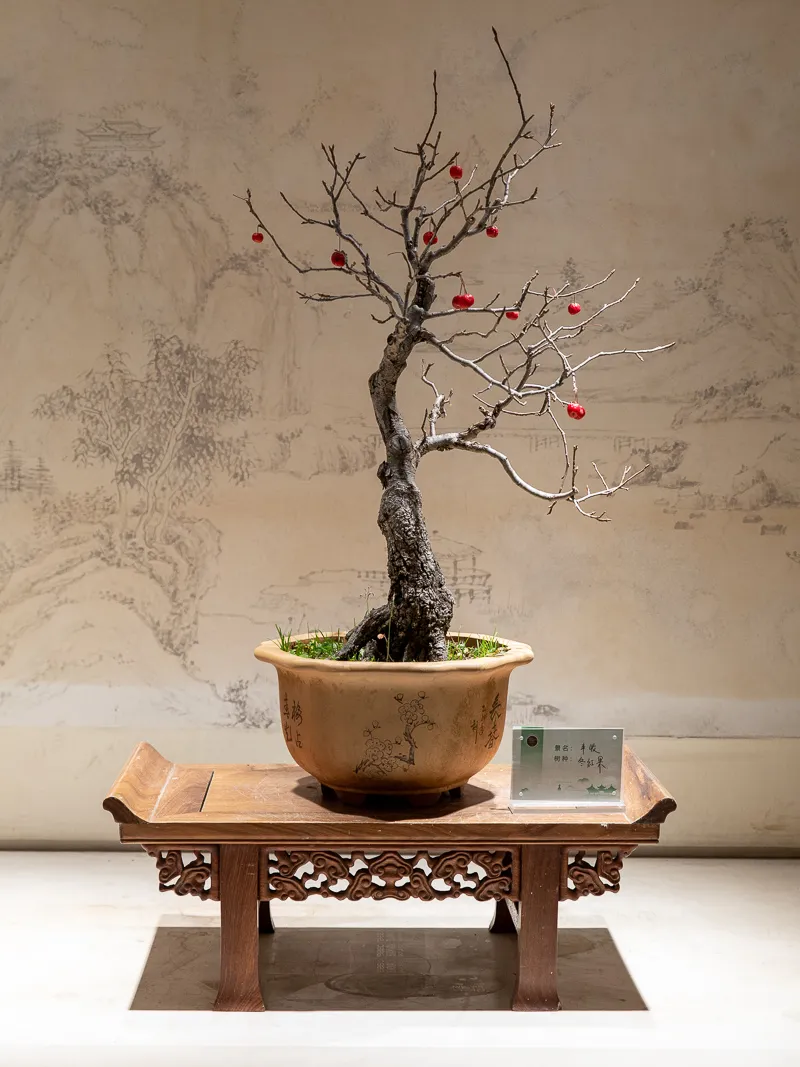
Yangzhou-style bonsai
Canon EOS 5D Mark IV
EF 24-70 f/2.8L II USM
F4.0 | 1/160 s | 57mm | ISO 800
Besides these places, Slender West Lake also has sites such as Jingxiang Study, Shibi Liuchong and the remains of the western gate of Tang Luocheng. But New Year’s Day falls in the low tourist season, and several places in the gardens were under renovation, so I did not explore them in detail and will leave them out here.
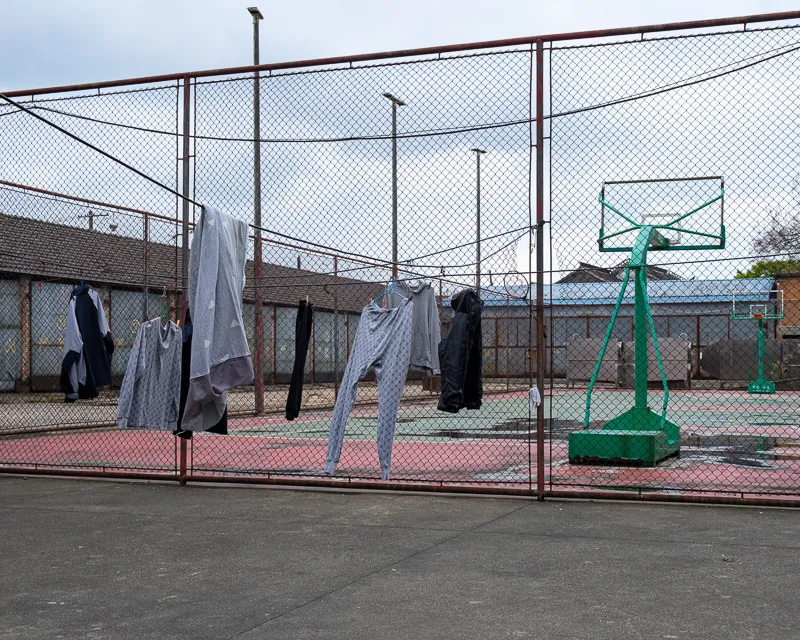
This slightly worn but lived-in scene reminded me of the places where I played as a child.
Fujifilm XT3
The Old City, Dongguan Street and Pishi Street
One thing Yangzhou deserves particular credit for is how completely it has preserved its old city. North of the ancient canal is a large area of old neighborhoods that still retain much of their original character. Apart from necessary repairs, they seem to have changed very little, at least during the ten years from 2010 to 2020. I enjoy walking through old neighborhoods, especially ones that are large, intact, undecorated, and still inhabited by local residents.
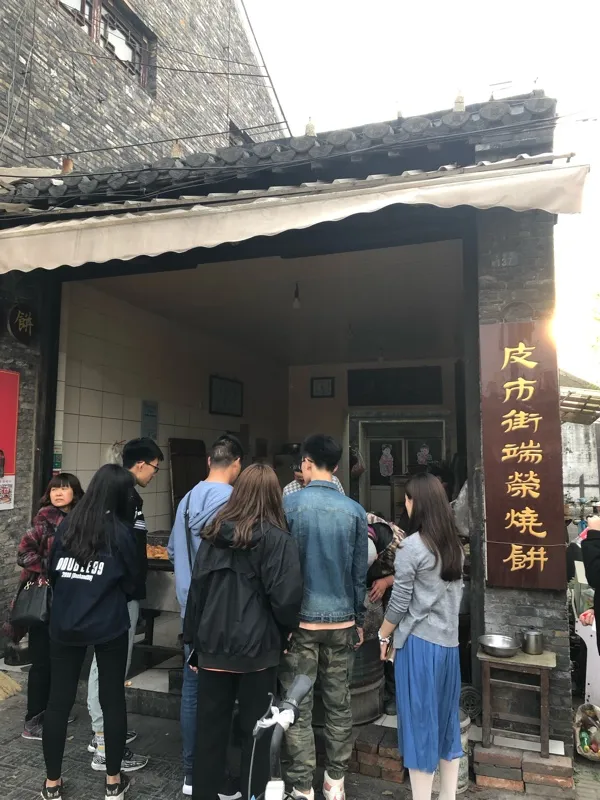
Duanrong Shaobing on Pishi Street
iPhone
The busiest street in this old city is probably Dongguan Street. It seems that every city has an old street of its own: Hefang Street in Hangzhou, Nanluoguxiang in Beijing, Shuijingxiang in Xining. Some old streets move with the times and become increasingly modern; some try hard to remain as they were but still cannot resist change; others seem almost unchanged even after many years.
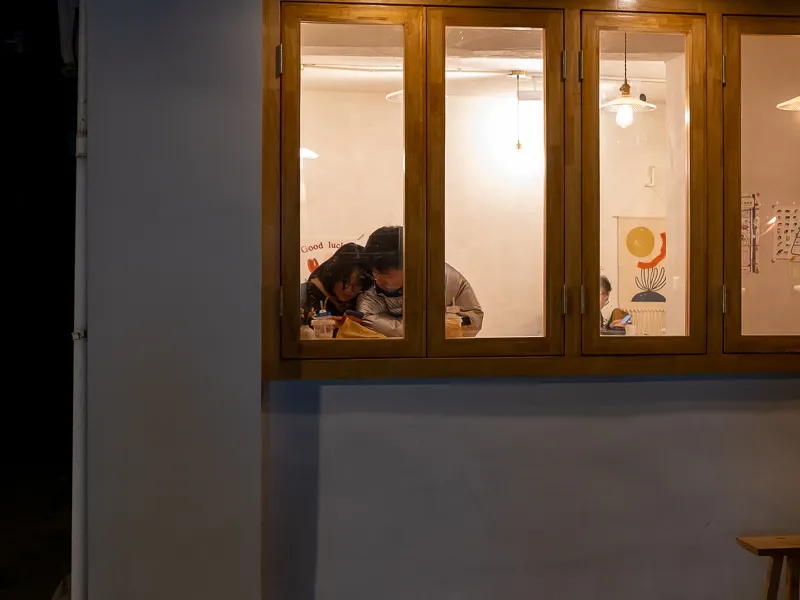
A milk tea shop popular with young people on Pishi Street
Fujifilm XT3
XF23mm F2 R WR
F3.2 | 1/100 s | 23mm | ISO 1600
Which kind is Dongguan Street? I think it falls somewhere between the latter two. When I first walked along Dongguan Street ten years ago, it was still quite plain, and many of the shops sold local goods. Yangzhou is known for lacquerware, and there were many lacquerware shops on the street at the time, along with long-established local brands such as Xie Fuchun and Cucha Danfan. Ten years later, very few lacquerware shops remain. In their place are milk tea shops and fried-skewer shops popular with younger visitors. Some old businesses hide quietly among the crowds and attract little attention; others have become cultural symbols of the street, with long queues outside their doors.
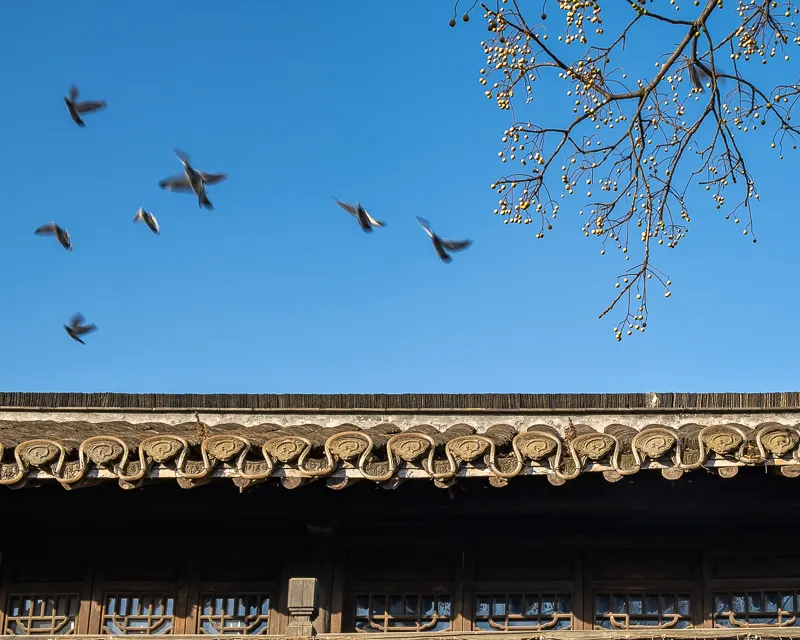
Old houses and birds on Dongguan Street
Fujifilm XT3
XF 18-55 F2.8-4 R LM OIS
F8.0 | 1/100 s | 26.5mm | ISO 160
Another old street that has changed even more is Pishi Street. It runs north to south along the southeastern side of the old city. In the Qing dynasty, it was a commercial street specializing in leather goods such as clothing, hats, blankets and horse-hoof sleeves. Ten years ago, it was just an ordinary street, lined with old houses and paved with large stone slabs. When I lived in Yangzhou, I often came here to buy shaobing for dinner from an old shop called Duanrong Shaobing. I do not know how long the shop had been there, but I never forgot the smell or the crisp pastry that flaked apart with every bite. Although Pishi Street is very close to He Garden, a 5A-rated attraction, there were few tourists here at the time. Ten years later, the street seems to have become a place young visitors feel they must see. Milk tea shops and barbecue restaurants along the road are decorated in neat, playful styles. Pale walls and simple interiors attract young tourists who pose for photos outside. In contrast, the old gray houses remain quietly beside them, receiving little attention. Like the people who once lived in them, some have already left, while others simply stay and watch everything change.

A child trying sugar blowing on Dongguan Street
Fujifilm XT3
XF 18-55 F2.8-4 R LM OIS
F8.0 | 1/100 s | 42.5mm | ISO 1600
Erfen Mingyue Lou, Qionghua Taoist Temple, the Ancient Canal and Lüyang Hotel
Many old buildings with interesting histories are hidden throughout the old city. Among them, Erfen Mingyue Lou, Qionghua Taoist Temple and Lüyang Hotel are especially worth mentioning.
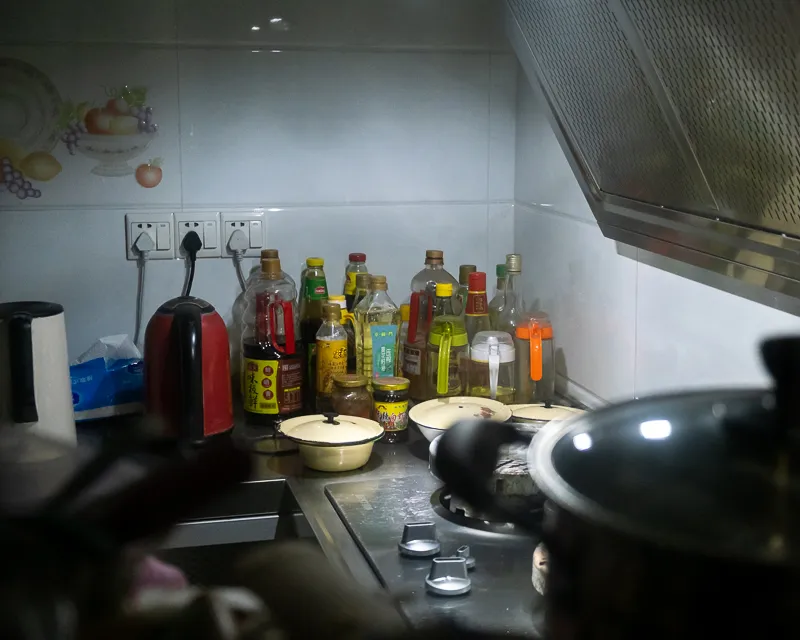
Looking through a window into the kitchen of a house in the old neighborhood, everything neatly arranged
Fujifilm XT3
XF 18-55 F2.8-4 R LM OIS
F4.0 | 1/40 s | 30.2mm | ISO 3200
Erfen Mingyue Lou takes its name from the line, “Of the moonlight beneath heaven, two parts belong to Yangzhou.” The line comes from the Tang poet Xu Ning’s Remembering Yangzhou:
Xiao Niang’s delicate face can hardly bear her tears,
Taoye’s fine brows reveal her sorrow with ease.
Of all the moonlit nights beneath heaven,
Two parts belong to Yangzhou.
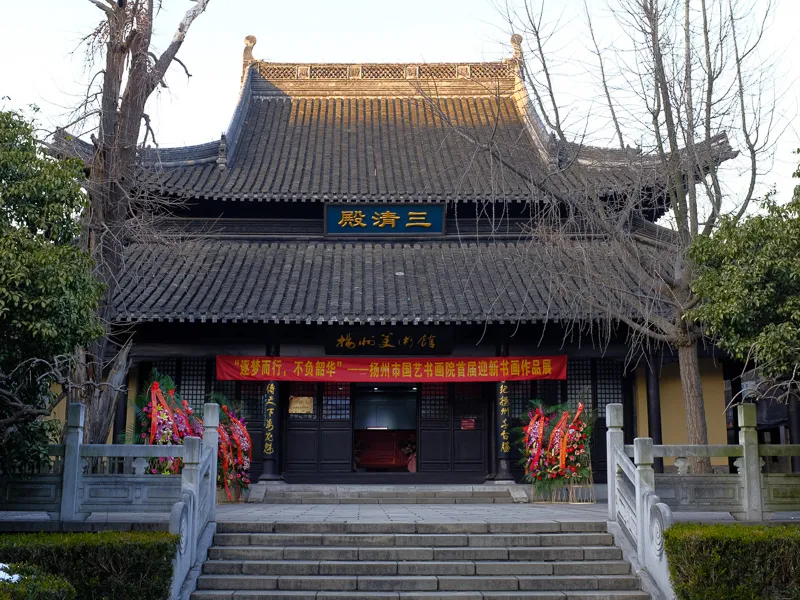
Sanqing Hall at Qionghua Taoist Temple, with a typical double-eaved hip-and-gable roof
Fujifilm XT3
XF 18-55 F2.8-4 R LM OIS
F8.0 | 1/100 s | 18.8mm | ISO 1250
This small garden hidden in the old city has a quietness that feels removed from the streets outside. It sits beside busy Guangling Road and is connected to the street by a narrow entrance corridor. Only a wooden sign above the entrance carries the five characters “Erfen Mingyue Lou”. If you are not looking carefully, it is easy to miss. When I lived in Yangzhou, I often passed along Guangling Road but never noticed the garden. It was only after leaving the city, when a friend mentioned it, that I found a chance to visit. The garden is small and free to enter. Walking through the corridor from the street into the garden feels almost like leaving the city behind. The noise disappears at once.
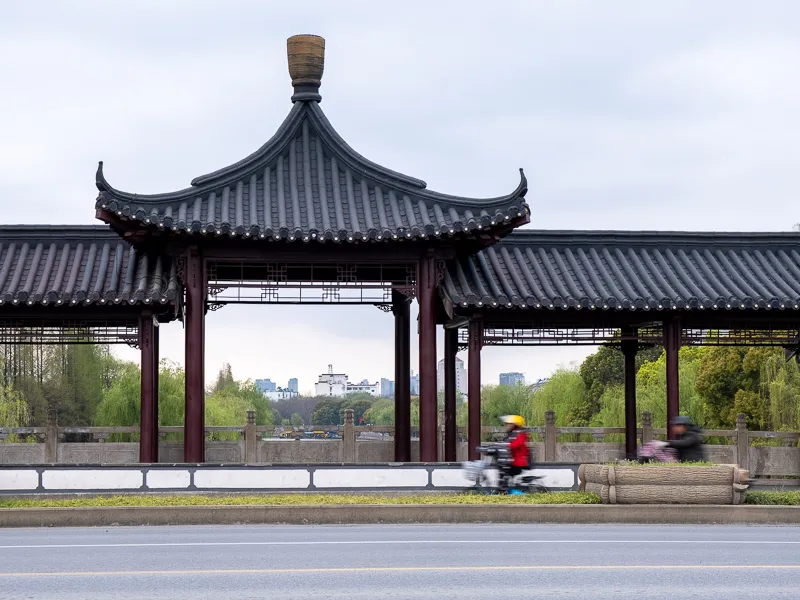
Dujiang Bridge over Yangzhou’s ancient canal. Pavilion bridges can be seen throughout the city.
Fujifilm XT3
XF 18-55 F2.8-4 R LM OIS
F8.0 | 1/40 s | 42.5mm | ISO 160
Although this Qing dynasty garden is small, its design shows care in every corner. It has rockeries, pavilions, ponds and bamboo groves. As the word “moon” in its name suggests, moon-related forms appear throughout the garden. Stone bridges, doorways and window frames are shaped either as full circles or curved crescents. Classical poems carved into the corridor walls add another layer to the garden.
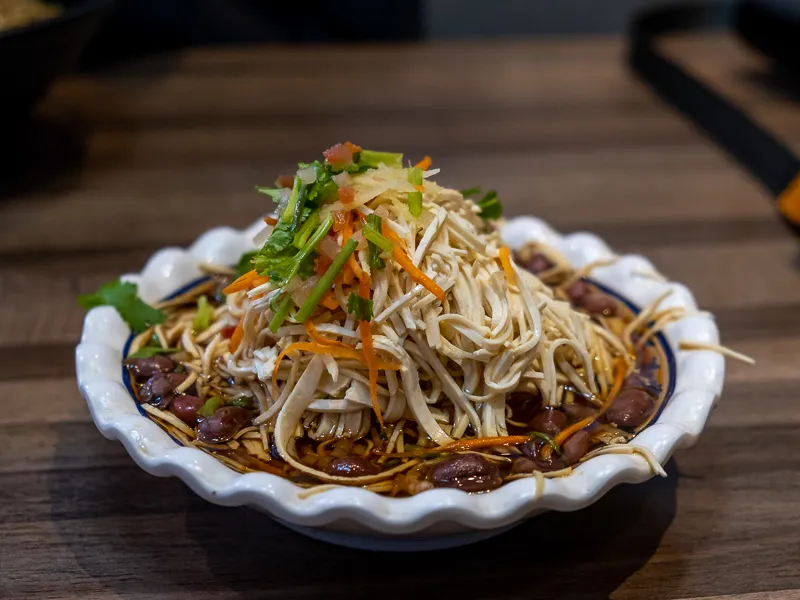
Blanched Tofu Threads, one of Yangzhou’s breakfast dishes, inexpensive and good
Fujifilm XT3
XF 18-55 F2.8-4 R LM OIS
F3.6 | 1/55 s | 34.3mm | ISO 1250
South of Dongguan Street, close to Wenchang Middle Road, stands a fairly inconspicuous stone archway marked with the words “Qionghua Taoist Temple”. Behind it is a group of old buildings that make up the temple complex. Its status can be seen in the typical hip-and-gable roof architecture, but because the site is small, not especially well known and requires an entrance ticket, relatively few tourists visit.
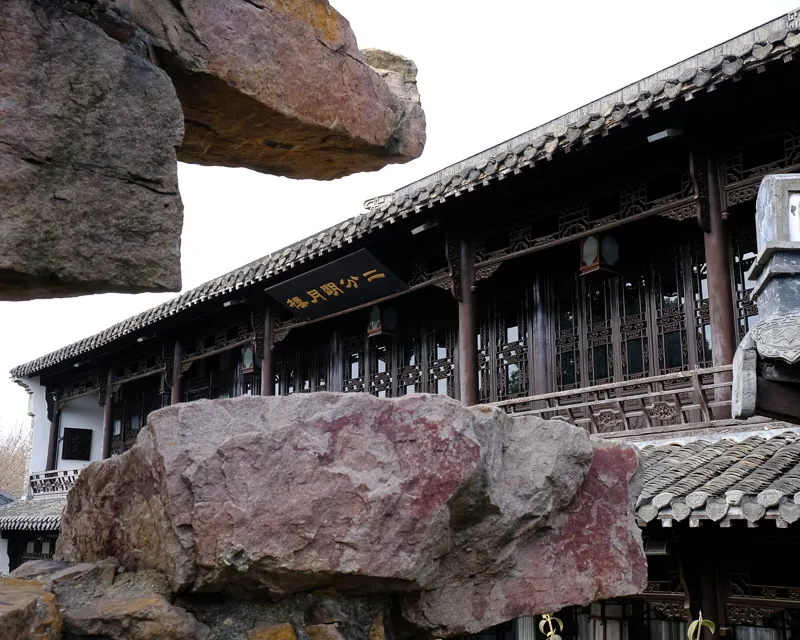
Erfen Mingyue Lou
Fujifilm XT3
XF 18-55 F2.8-4 R LM OIS
F9.0 | 1/40 s | 18mm | ISO 160
As a major southern city in earlier times, Yangzhou naturally had well-developed water transport. The Beijing–Hangzhou Grand Canal was an important waterway running from Beijing in the north to Hangzhou in the south, crossing several provinces and cities and linking a number of major rivers. Located where the Yangtze River and the Grand Canal meet, Yangzhou became the country’s largest commercial center at the time and a major international port in the East. The ancient canal that runs around the old city is one of the oldest sections of the Beijing–Hangzhou Grand Canal and follows the route of the Sui dynasty canal almost exactly, forming the well-known “Three Bends of Yangzhou”. If Yangzhou’s scattered sights are pearls, then the canal is the thread that connects them. It may not be the most eye-catching part, but it is important.
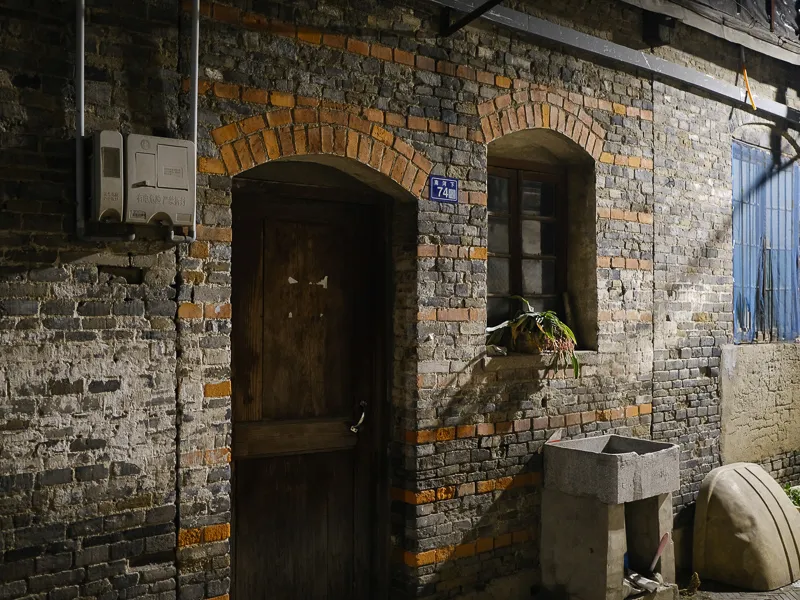
Old house
Fujifilm XT3
XF 23mm F2 R WR
F2.5 | 1/17 s | 23mm | ISO 1250
The last place worth mentioning is Lüyang Hotel, a Republican-era building in the old city. Its name comes from the poet Wang Yuyang’s line, “The city of green willows is Yangzhou.” It was one of the earliest Western-style hotels in modern Yangzhou and is the city’s only Republican-era hotel still in operation. Built around the end of the Qing dynasty and the beginning of the Republican period, the building has a strong architectural character from that era. Its gray brick walls and red brick columns are typical of the time. Stepping through the door, the dance floor in the center of the lobby makes it easy to imagine the well-dressed guests who once gathered here. As one of Yangzhou’s earliest modern hotels, it hosted many well-known figures, including Mei Lanfang and Yu Dafu. But as one era after another passed, Lüyang Hotel also grew old. It now sits quietly in the old city, telling visitors something of what it once was. The hotel is still operating today. If you only want to look around inside, there is no entrance fee. As for the current room rates, I do not know.
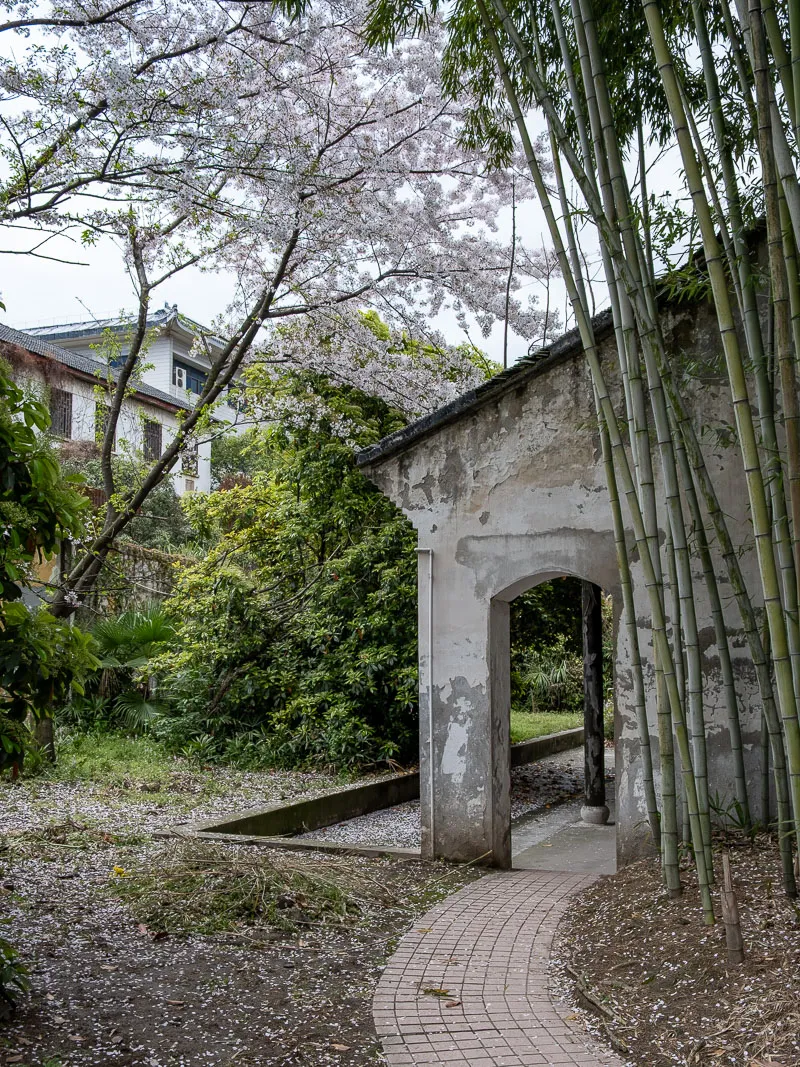
Cherry blossoms in the courtyard of my former workplace
Fujifilm XT3
XF 18-55 F2.8-4 R LM OIS
F4.0 | 1/320 s | 24.3mm | ISO 160
Afterword
Yangzhou, a city in the Yangtze River Delta, carries traces of almost every period of Chinese history. But with urbanization and the spread of the internet, it too has been unable to avoid change. Fortunately, Yangzhou is still trying to remain itself, keeping its quiet and understated character. At the center of that character are its long history, deep cultural traditions and the large areas of old architecture that have survived. Among the cities I have visited, stayed in or lived in, Yangzhou is probably one of the best at preserving these things.
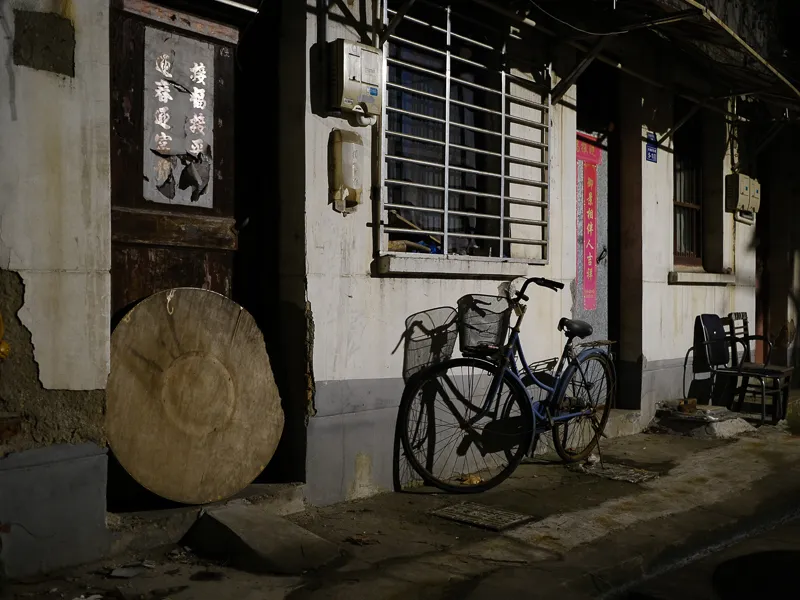
This sense of lived-in nostalgia is part of Yangzhou’s particular charm
Fujifilm XT3
XF 18-55 F2.8-4 R LM OIS
F9.0 | 1/50 s | 23mm | ISO 1250
Every visit to Yangzhou brings something new. It might be a garden hidden deep inside an alley, or the return of an old scene from memory. At a time when cities are becoming increasingly alike, it is not easy for a place to keep its own character without simply following trends.
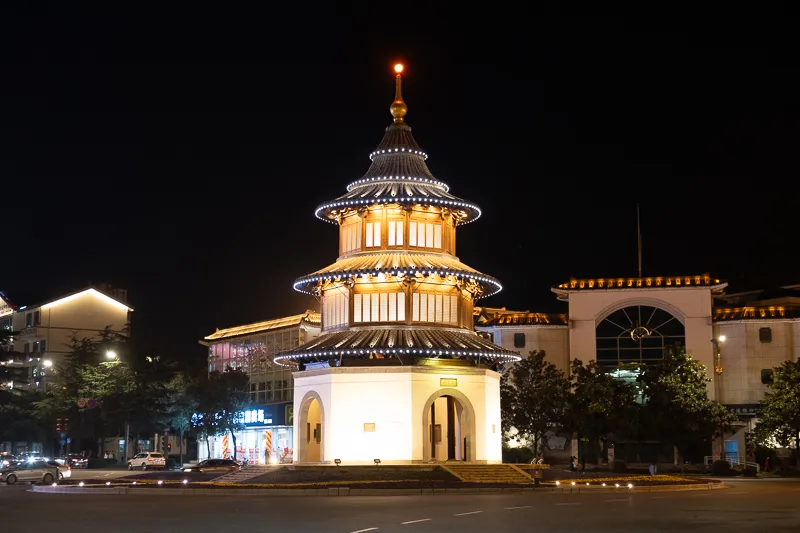
Wenchang Pavilion, a landmark of Yangzhou
Fujifilm XT3
XF 18-55 F2.8-4 R LM OIS
F3.6 | 1/35 s | 35.8mm | ISO 1250